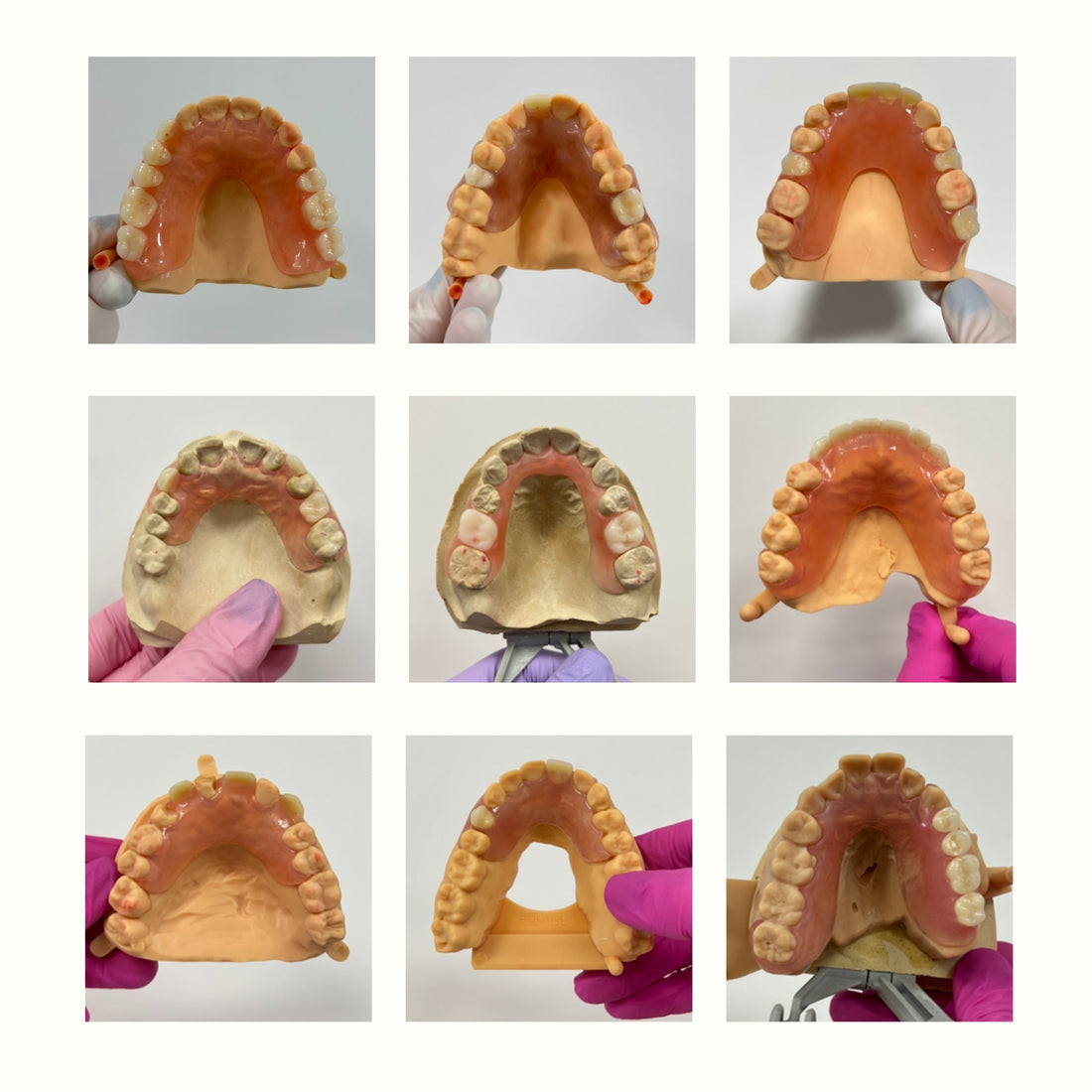
How long each partial denture material actually lasts
Share
Acrylic runs 2 to 3 years, flexible 3 to 4, and a cast metal frame can outlast both at 5 years or more. Cleaning habits move those numbers more than the brand of appliance ever does.
The material you pick today is really a decision about how often you plan to replace it, and what that costs over time.
Why acrylic wears fastest
The acrylic partial denture flexes slightly with every bite, and that daily movement thins the base over a few years. It is also the cheapest to replace, which is why many people treat it as a build they expect to redo rather than keep forever.
Why flexible sits in the middle
The flexible partial denture uses a softer material that resists cracking better than acrylic, but that same softness means it slowly loses its shape under years of chewing load. Three to four years is typical before the fit noticeably loosens.
Why cast metal lasts longest
The cast metal partial denture uses a milled cobalt frame instead of a poured base, and that frame rarely fails on its own. What usually needs attention first is the acrylic teeth set into it, which can be replaced without remaking the whole frame.
How long each material actually lasts
| Material | Typical lifespan | What wears it out | Per arch |
|---|---|---|---|
| Acrylic | 2 to 3 years | The base thins with daily flexing | $469 |
| Flexible | 3 to 4 years | The material softens slowly under load | $549 |
| Cast metal | 5 years or more | Rarely the frame, usually the acrylic teeth on it | $749 |
Ranges assume daily cleaning and nightly removal. Home impression kit and free shipping both ways are inside every price.
What actually extends any of them
- Take it out every night, the material needs the break to hold its shape.
- Clean it daily with a soft brush, not toothpaste, which is abrasive enough to dull the surface.
- Store it dry in the case rather than in water or a napkin.
- Bring in a rocking fit or a sore spot early, before it turns into a crack.
Pain, bleeding, or a denture that has already cracked goes to a dentist before anything else.
Questions people actually ask
Which partial denture material lasts longest
Cast metal, five years or more with daily cleaning. The milled frame rarely fails, though the acrylic teeth set into it eventually need replacing.
Does daily cleaning actually extend the life
Yes, meaningfully. Plaque left on the base is what accelerates staining and material breakdown, and nightly removal is what lets the material recover its shape.
What are the signs a partial denture needs replacing
Rocking while you chew, a clicking sound while you talk, a crack in the base, or a sore spot that keeps returning in the same place.
Can a shorter-lived material still be the right choice
Yes. Acrylic wears faster than metal but costs less up front and replaces easily, which suits anyone who is not ready to commit to one build for years.
Are replacement partial dentures HSA or FSA eligible
Artificial teeth and dentures are listed as medical expenses in IRS Publication 502, so a replacement partial normally qualifies. Your plan administrator makes the final determination.
Comparing the three materials by fit and looks instead of lifespan, read acrylic, flexible or metal, which fits your mouth. Ready to order, see what a bottom denture really costs without insurance.
Every partial denture we build carries a 60 day manufacturer warranty and ships from a dental lab in Hollywood, Florida.