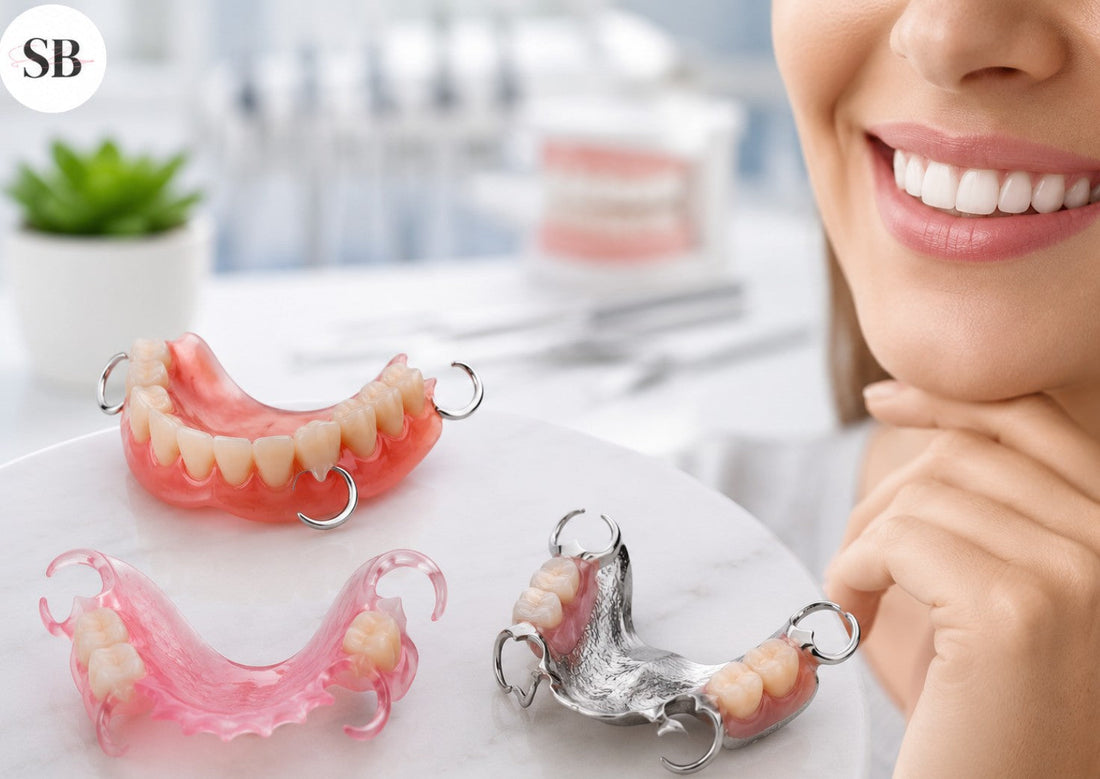
What are the real side effects of a partial denture
Mild gum soreness, extra saliva, a bulky feeling and slight speech changes are the normal side effects of a new partial denture, and they usually fade within a week or two. Sharp pain, bleeding, swelling or a piece that will not stay in place are not normal, and mean you should see a dentist first.
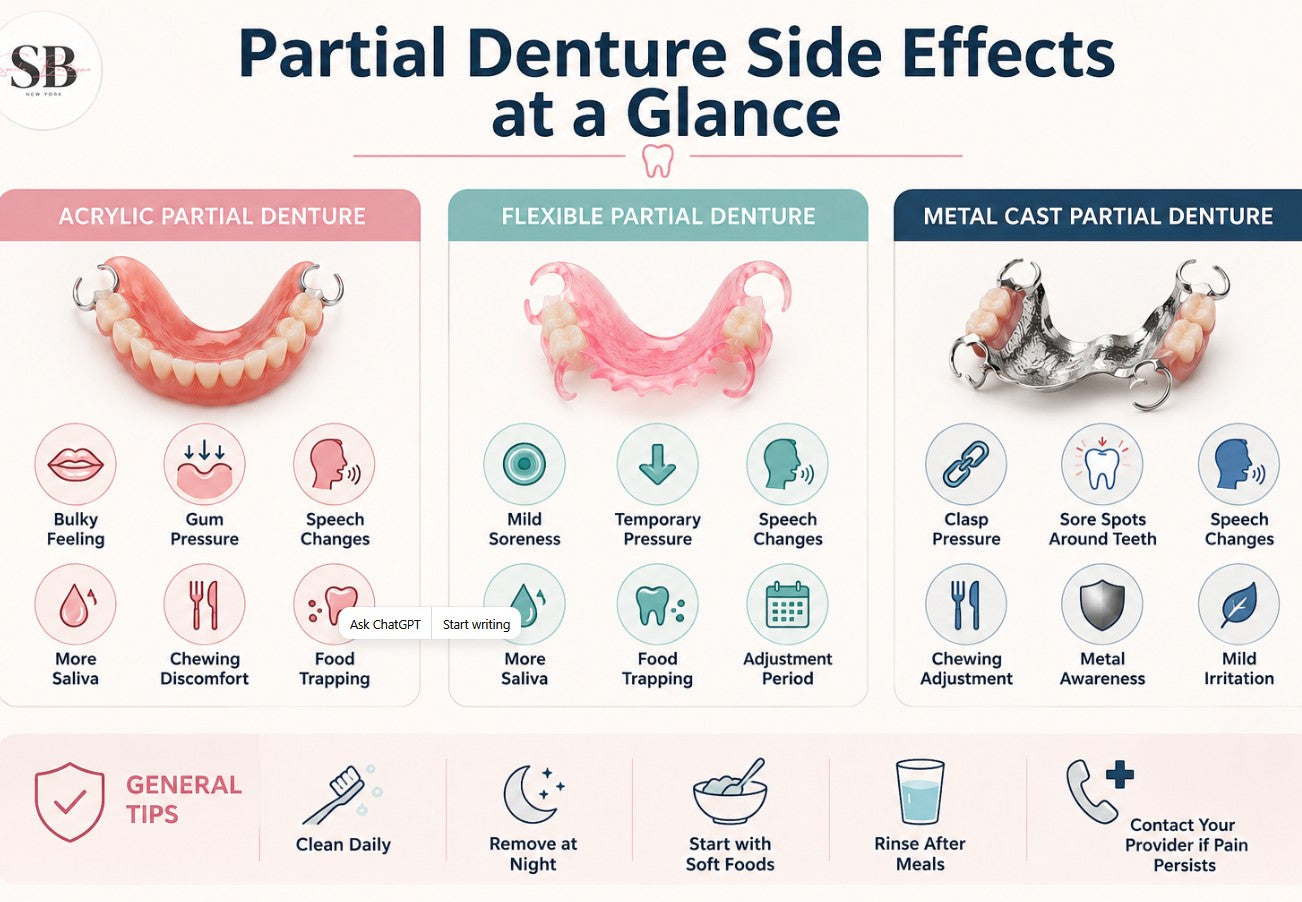
Side effects at a glance
| Build | Common adjustment | Why people choose it |
|---|---|---|
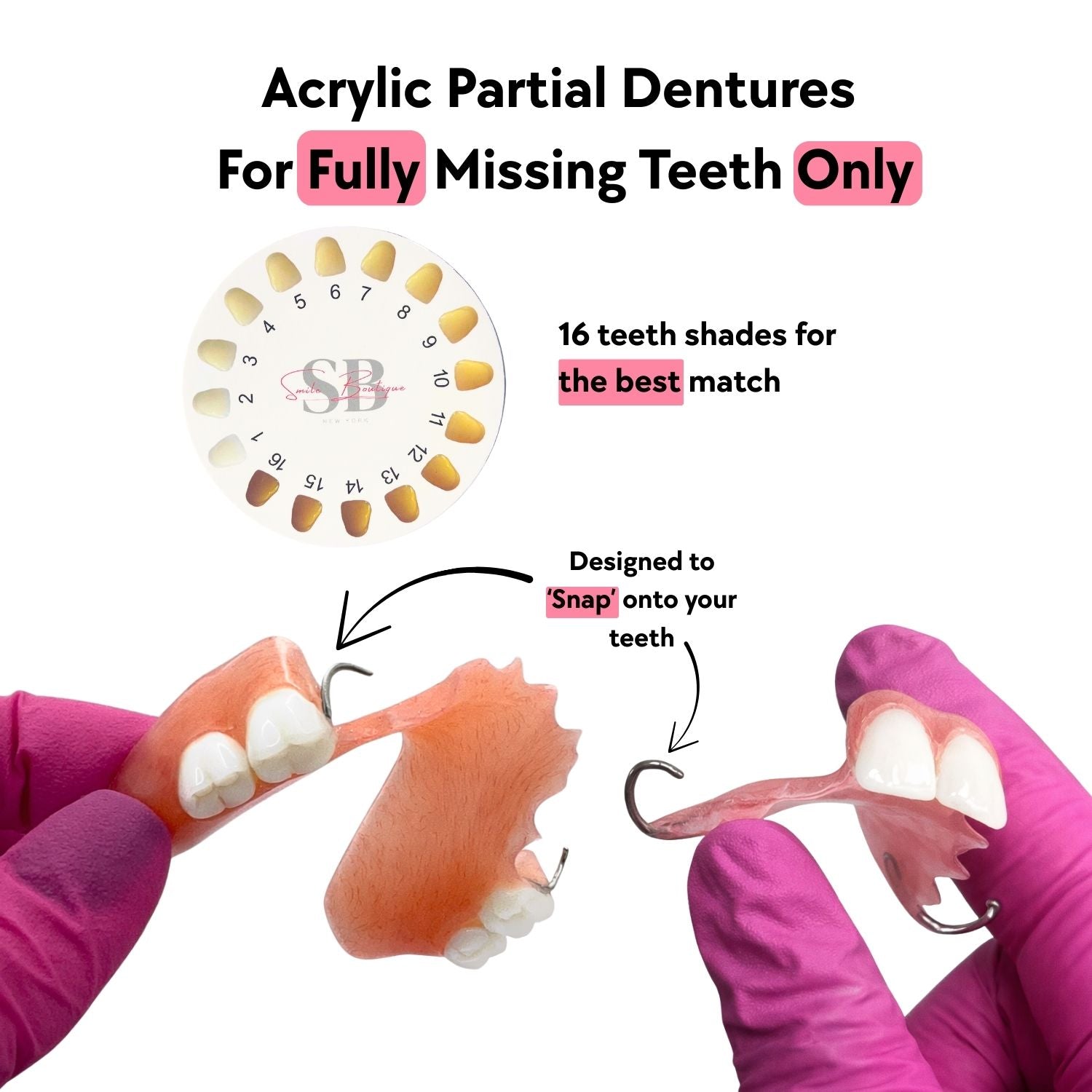
| Acrylic partial denture | Bulkiness, gum pressure, speech changes | Lowest price, $469 |
| Flexible partial denture | Mild soreness, lighter pressure | Soft fit with no visible metal, from $549 |
| Metal cast partial denture | Clasp pressure, metal awareness | Thinnest and most durable, $749 |
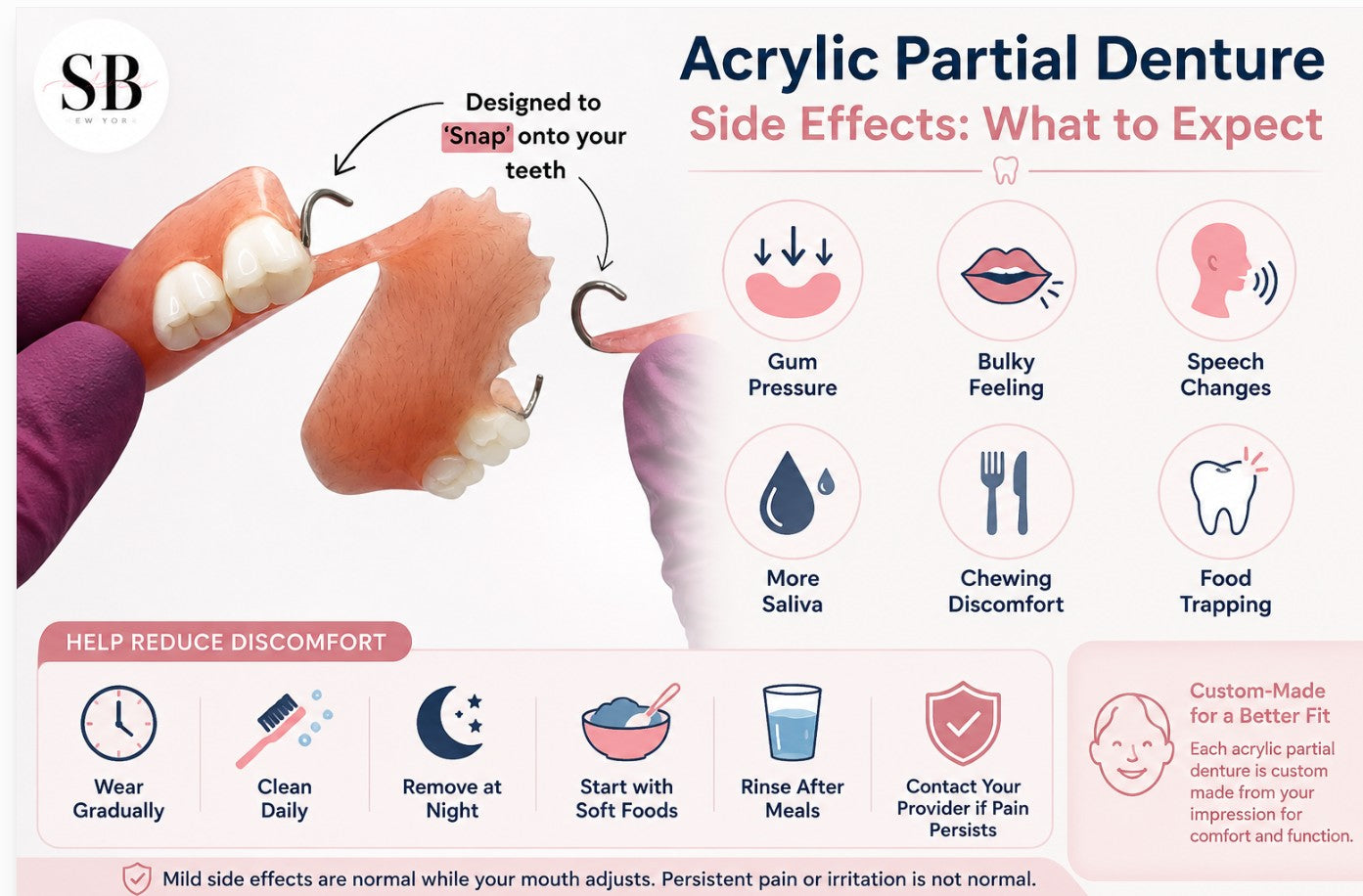
Acrylic, what to expect
The acrylic base covers more of the gum than other builds, so a bulky feeling in the first few days is common. Mild pressure and extra saliva usually settle in about a week of regular wear.
Flexible, what to expect
A flexible base is thinner and lighter, so soreness tends to be milder. Where the clasps rest against the gum is the most common spot for a short adjustment period.
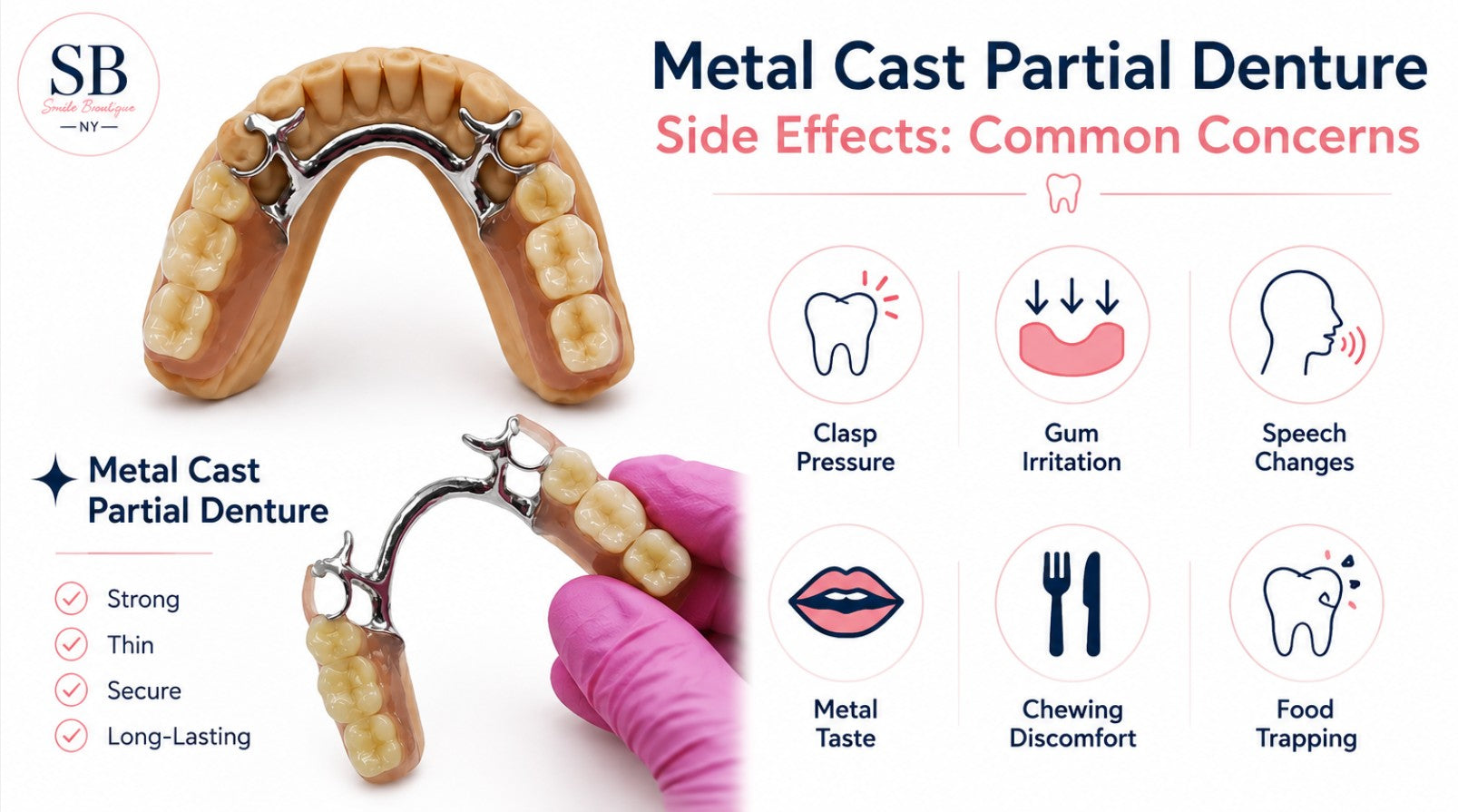
Metal cast, what to expect
Metal clasps hold the strongest grip on your remaining teeth, so mild pressure where they rest is normal at first. This is also the build that most people keep the longest.
When to see a dentist instead of waiting it out
- Pain that is severe or getting worse
- Ongoing bleeding or swollen gums
- A sharp edge cutting the inside of the mouth
- A loose natural tooth under a clasp
- A denture that will not stay seated
Do not try to file, cut or reshape a denture yourself. See a dentist first if any of the above happens.
What it costs without insurance
Acrylic starts at $469, flexible starts at $549 and metal cast starts at $749, all per arch with the impression kit included, and both arches together are priced lower than ordering two single arch appliances separately.

Frequently asked questions
Are partial denture side effects temporary
Most are. Mild soreness, pressure, extra saliva and speech changes commonly improve within one to two weeks as the mouth adjusts.
Do acrylic partial dentures have more side effects
Acrylic tends to feel bulkier at first since the base covers more gum, but the adjustment period is similar in length to flexible and metal builds.
Are partial dentures HSA or FSA eligible
Dentures are listed as medical expenses under IRS Publication 502, so a partial denture normally qualifies. Your plan administrator makes the final determination for your plan.
When should I stop wearing it and see a dentist
Stop wearing it and see a dentist first if you notice severe pain, ongoing bleeding, swelling, a sharp edge or a piece that will not stay seated.
Compare the acrylic partial denture, the flexible partial denture and the cast metal partial denture, check how HSA and FSA payment works, and see a real before and after transformation.
Smile Lab USA is made in the USA, with a 60 day manufacturer warranty on every appliance.