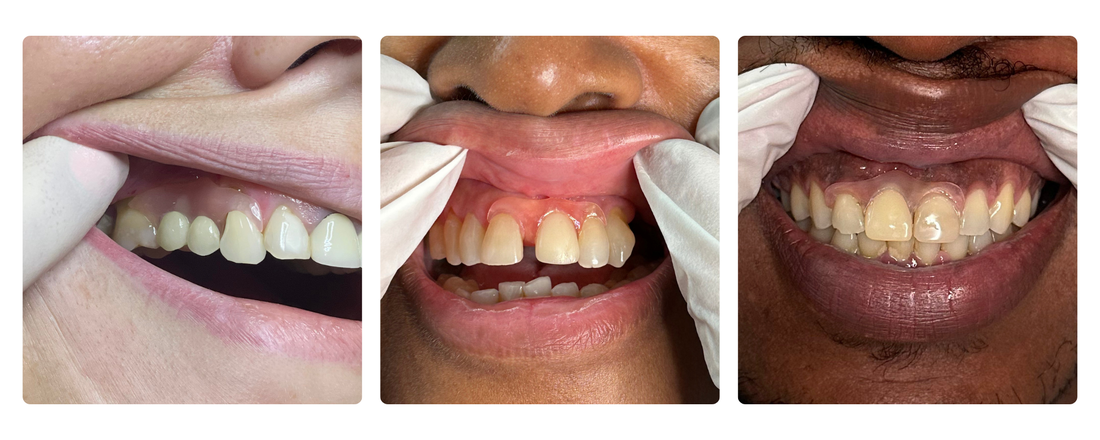
What actually changed in partial dentures over the years
Share
The biggest change is not the smile, it is the base. Flexible nylon and milled metal frames replaced a lot of what used to be one rigid slab of pink acrylic, and the impressions are taken at home instead of in a chair.
Four builds now cover what one used to, and each trades price against how much of it shows when you talk.
The material shift
Older acrylic partials are a single rigid piece with wire clasps, strong and inexpensive but easy to spot up close. Flexible bases are thin, translucent nylon that takes on your gum tone and carries no metal at all.
Cast metal frames sit between the two, thinner than acrylic and stronger than flexible, with the rest arms placed where they stay out of a normal smile.
Four builds, what changed in each
| Build | Per arch | Base material | Visible metal |
|---|---|---|---|
| Acrylic partial denture | $469 | Rigid pink acrylic | Thin wire clasps |
| Semi-flex flipper | $349 | Milled, thin and rigid | None |
| Flexible partial denture | $549 to $649 | Translucent flexible nylon | None |
| Cast metal partial | $749 | Milled metal frame | Thin rest arms, out of the smile |
Home impression kit and free shipping both ways are inside every price.
The process shift
The other change is where the work happens. Instead of multiple chair visits for impressions and fittings, a kit ships to your address, you take the impressions yourself, and a technician reviews them before anything is built.
A failed impression gets a fresh kit at no charge rather than another appointment, which is the part that actually removes the office from the process.
Which build fits which case
Front teeth and anywhere visible in conversation call for flexible or semi-flex, since neither shows metal. Back teeth, where nothing is on display, are where acrylic still makes the most financial sense.
A wider gap that needs a strong bite is the case for cast metal, since the milled frame carries chewing load better than either of the other two.
How ordering works
- The impression kit reaches you by USPS in 3 days or FedEx overnight.
- You take the impressions at home and mail them back with the prepaid label.
- A licensed dentist in your state reviews your photos before your kit ships, and a technician checks the impression when it comes back.
- The partial arrives 14 to 28 days later, made in Hollywood, Florida.
Health account cards are accepted at checkout, and how HSA and FSA payment works covers the receipt your plan will ask for.
Questions people actually ask
What actually changed in partial denture materials
Flexible nylon bases and milled metal frames replaced a lot of what used to be poured, rigid acrylic. Both bend or fit closer to the gum, which is what makes them harder to spot.
Do I still have to go to a dental office for a partial denture
No. The impressions are taken at home from a kit we mail you, and the appliance is built from those in a dental lab in Hollywood, Florida. The chair visits older dentures required are not part of this process.
Is acrylic outdated compared to flexible
No, it is still the strongest value for teeth nobody sees and the lowest price of the four builds. Flexible earns its cost on a gap that shows, not everywhere.
How long does a modern partial denture last
Two to five years with daily cleaning, depending on the build. A cast metal frame tends to outlast acrylic and flexible because the frame itself does not flex or wear as fast.
Compare the metal-free build against acrylic in the flexible partial denture, or see the strongest option at the cast metal partial denture. For how natural any of them can look, read whether a partial denture looks natural.
Smile Lab USA builds every appliance in Hollywood, Florida, with a 60 day manufacturer warranty on the work.