What temporary teeth actually do before they fall out
Share
A child grows twenty deciduous teeth by around age three, and each one holds open the exact spot a permanent tooth will need later. They are not a placeholder to ignore, they are doing real work while they last.
Temporary teeth handle chewing and speech during the years a jaw is still growing, and they guide the permanent set into position underneath them. Losing one too early, to decay or injury, can throw that guidance off.
The eruption and loss timeline
- 6 to 10 months. The lower front teeth are usually first to come in.
- Age 2 to 3. All twenty temporary teeth have typically arrived.
- Age 6. The lower front teeth are usually first to go, right around when the first permanent molars come in behind them.
- Age 12 to 13. The last temporary tooth is normally gone, replaced by its permanent successor.
Why an early loss matters
When a temporary tooth is lost well before its permanent replacement is ready, the teeth on either side can drift into the open space. That narrows the spot the permanent tooth needs, which is one of the more common causes of a crowded adult smile years later. If a baby tooth is knocked out by injury rather than lost naturally, see a dentist first, since a spacer sometimes has to hold the gap open until the permanent tooth is ready to come through.
The same logic carries into adulthood. A missing tooth left alone, at any age, tends to let the teeth around it shift, which is exactly why dentists push people toward filling a gap sooner rather than waiting.
What comes after the temporary set
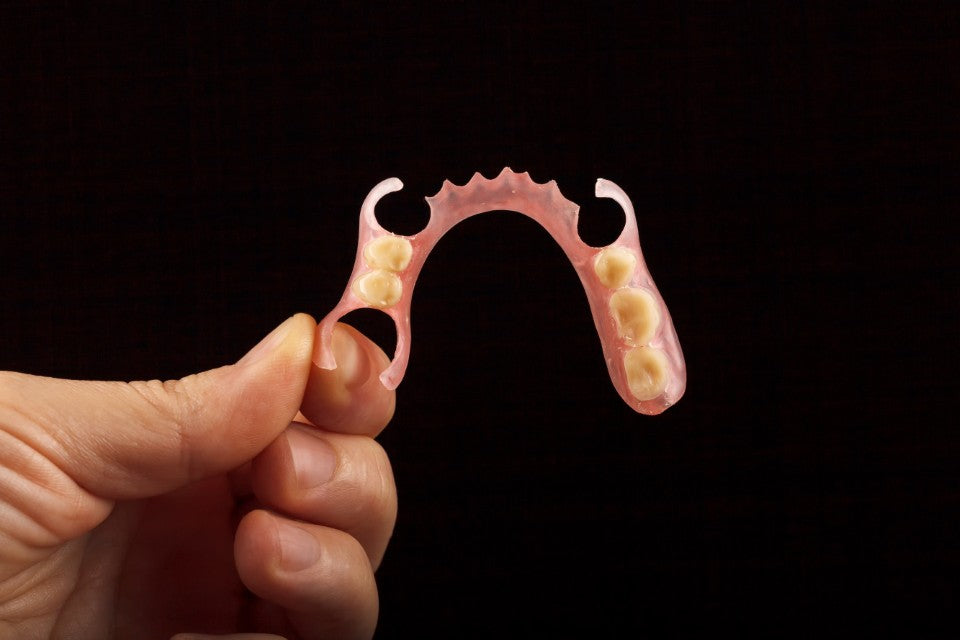
Once the permanent teeth are in and orthodontic work wraps up, many people wear a retainer for a while to keep everything where it landed, sometimes for a year, sometimes for life. And later on, if an adult tooth is lost to decay, gum disease or an accident, the closest thing to a temporary tooth for a grown mouth is a flipper, a light removable appliance that holds the gap without surgery while a longer-term plan gets figured out.
Questions people actually ask
At what age do temporary teeth start falling out
Usually around age six, starting with the lower front teeth. The full set of twenty is normally gone by age twelve or thirteen.
How many temporary teeth does a child have
Twenty, ten on top and ten on the bottom, compared to the thirty-two permanent teeth that eventually replace and outnumber them.
What happens if a temporary tooth is lost too early
Neighboring teeth can drift into the empty space before the permanent tooth is ready to come in, which crowds the smile that follows. See a dentist first if a baby tooth is lost to injury rather than naturally.
Do adults ever need a temporary tooth again
In a different sense, yes. A removable flipper is sometimes called an adult's temporary tooth, holding a gap while a longer-term plan gets sorted out.
If that describes an adult gap you are dealing with now, what a single tooth flipper actually is covers how it works. For holding a smile in place after braces, see the Essix pontic retainer.
Smile Lab USA builds every appliance in Hollywood, Florida, with a 60 day manufacturer warranty.