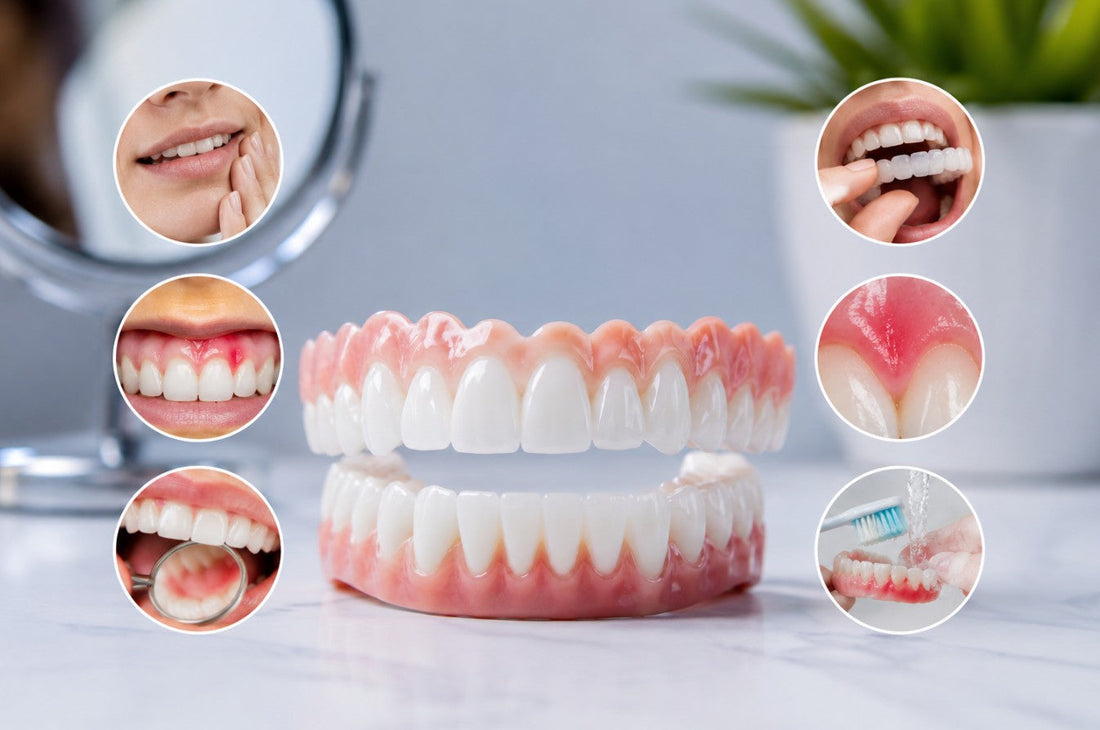
Snap-on veneer side effects, what is normal and what is not
Share
Most snap-on veneer side effects are mild and temporary, pressure, extra saliva or a short speech adjustment while your mouth gets used to a new appliance. Pain, bleeding or swelling that does not fade in a week is not normal and should not be ignored.
The difference between a normal adjustment and a real problem usually comes down to fit. A custom appliance built from your own impressions rarely causes lasting trouble when it is worn and cleaned the way it is meant to be.
What a normal adjustment feels like
The first few days, expect some tightness around the teeth, a little more saliva than usual, and small changes in how certain sounds come out. Reading aloud for a few minutes a day speeds up the adjustment.
These effects fade with wear. If anything feels sharp, cuts the inside of your lip, or the veneers will not seat fully, stop and get in touch rather than push through it.
Normal adjustment against a real problem
What is normal and what is not
| Symptom | Usually normal | See a dentist first |
|---|---|---|
| Pressure or tightness | First few days | Severe or will not seat |
| Saliva or speech change | First one to two weeks | Does not improve at all |
| Gum soreness | Mild, fades quickly | Bleeding or swelling |
| Fit | Snug but removable | Rocks, falls out, or wont come out |
Why fit is the real cause behind most problems
An inaccurate impression is behind most of the complaints people search for, veneers that feel too tight, sit unevenly, or move while talking. A custom process built from your own impression kit exists specifically to avoid that.
Cheap, one-size appliances skip that step entirely, which is why they tend to feel bulky and rub the gums more than a custom fit does.
Keeping the risk of irritation low
- Remove the veneers before sleeping so the gums get a break.
- Brush and floss your natural teeth before putting them back in.
- Rinse the veneers after meals and avoid hard, sticky or very crunchy foods.
- Stop wearing them and reach out if pain, bleeding or swelling continues.
People with untreated cavities, active gum disease, or a loose or painful tooth should see a dentist first before wearing any removable cosmetic appliance.
Questions people ask
Do snap-on veneers have side effects
Most people notice mild pressure, extra saliva or a slight speech change in the first few days. That settles as the mouth adjusts. Pain, bleeding or swelling that continues is not a normal adjustment.
Why do snap-on veneers feel tight at first
The material needs enough grip to stay in place, so a little pressure is expected. If it will not seat fully or the pressure is severe, stop wearing it and contact us before forcing it into place.
Can snap-on veneers be worn while eating
Soft foods are generally fine. Hard candy, ice, sticky caramel and tough meat put pressure on the appliance and can loosen or crack it, so they are worth skipping while you wear veneers.
Should snap-on veneers be worn overnight
No. Take them out before sleep so the gums and natural teeth underneath get a break, and clean both the veneers and your teeth before you put them back in.
Not sure you are inserting them correctly, read how to wear snap-on veneers. Comparing them to a tooth replacement instead, see snap-on veneers against partial dentures.
Every set ships from a dental lab in Hollywood, Florida, backed by a 60 day manufacturer warranty.