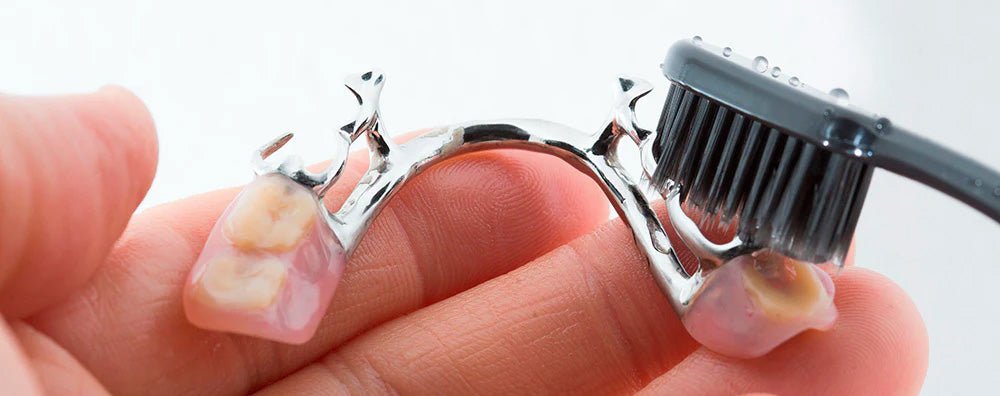
Why cleaning your dental appliance every day actually matters
Share
A removable dental appliance that is not cleaned daily builds up plaque within hours, and that plaque is what leads to bad breath, gum irritation, and a shorter lifespan for the piece itself.
The routine is short. What matters is doing it every day rather than doing it perfectly.
Why daily cleaning matters
Any removable appliance, whether it is a flipper, a partial denture, a night guard, or a retainer, sits against your gums and teeth for hours at a time. Bacteria and food debris that build up on it transfer straight back to your mouth, which is why cleaning it is as much a part of oral care as brushing your natural teeth.
Regular cleaning also protects the appliance itself. Plaque and tartar degrade acrylic and clear plastic over time, and a buildup that goes uncleaned can leave permanent staining or a rougher surface that holds even more bacteria.
Care notes by appliance
| Appliance | What needs extra attention |
|---|---|
| Flipper or partial denture | Clasps trap food, brush them separately |
| Flexible partial denture | Skip hard scrubbing, the material scratches easily |
| Night guard | Dry fully before storing, moisture breeds odor |
| Essix retainer | Never hot water, it warps the clear plastic |
The daily routine
- Rinse the appliance under running water right after you take it out.
- Brush it with a soft-bristled brush and a mild, non-abrasive cleaner, never regular toothpaste.
- Soak it in cleaning foam or an ultrasonic bath to reach the parts a brush misses.
- Rinse it again before it goes back in your mouth, and store it dry when it is out.
The cleaning and whitening foam works on every removable appliance and doubles as a stain lifter, and the ultrasonic cleaner is the deeper option for anyone who wants a weekly reset. A sterilization case keeps it clean in storage between wears.
What to avoid
Hot water, alcohol-based mouthwash, and whitening toothpaste all damage removable appliances faster than normal wear. Avoid bleach entirely, since it breaks down the material and can discolor metal clasps.
If your gums stay sore, inflamed, or bleed after cleaning your appliance correctly, see a dentist rather than adjusting the fit yourself.
Frequently asked
How often should a flipper or partial denture be cleaned
Every day, ideally after every meal. Food particles left on the appliance turn into plaque within hours and cause odor and staining faster than most people expect.
Can I clean a night guard the same way as a denture
Mostly, yes. Rinse after use, brush gently with mild soap, and avoid hot water on both. A night guard needs less frequent deep cleaning since it only touches saliva, not food.
What happens if I stop cleaning my appliance regularly
Plaque and tartar build up, which can lead to gum irritation, bad breath, and a shorter lifespan for the appliance itself. See a dentist if your gums stay sore or inflamed.
Is an ultrasonic cleaner worth it for one appliance
If you wear it daily, yes. It reaches ridges and clasps that a toothbrush cannot, and a few minutes a week adds real time to how long the appliance stays comfortable.
Have a clear retainer specifically, read how to keep a clear retainer clean. Comparing your options for a missing tooth, see flipper against partial denture.