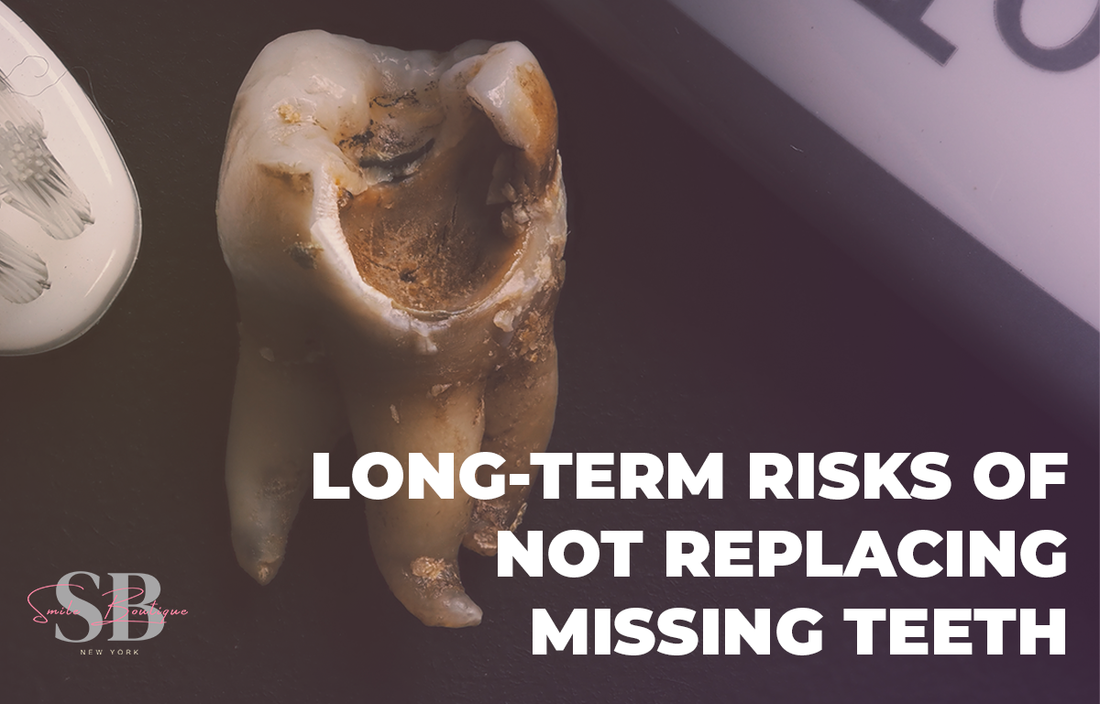
What happens if you never replace a missing tooth
Share
An empty gap does not stay still. Bone in the jaw thins without a tooth root to support it, and the teeth around the space begin drifting toward it within months, not years.
None of this happens overnight, which is exactly why it is easy to put off. A removable appliance costing a few hundred dollars is a lot easier to justify once you see what the wait actually costs.
What an open gap does over time
| Time since loss | What tends to change |
|---|---|
| First few months | Jawbone in the area starts to thin from lack of chewing pressure |
| Six months to a year | Neighboring teeth begin drifting toward the open space |
| One to two years | Bite alignment shifts, and food traps more easily around the gap |
| Two years and beyond | Jawbone loss and tooth movement are harder to reverse without added treatment |
General patterns, not a diagnosis. See a dentist for anything specific to your mouth.
Why the jawbone changes first
Bone stays dense because chewing puts pressure on it through the tooth root. Remove the tooth and that pressure stops, so the body gradually reallocates the bone elsewhere. The change is not painful and often not visible early on, which is part of why it goes unnoticed.
Why the gap becomes a bigger problem than one tooth
Teeth next to an open space have nothing holding them in line, so they lean and shift toward the gap over months. That movement changes how your bite meets, which can mean more wear on the teeth doing extra work and a harder time cleaning around the new angles.
An open gap also traps food more easily than a filled one, and that is a common trigger for gum irritation around the site. Any bleeding, swelling or pain there is worth a dentist visit before anything else.
Closing the gap without surgery
A tooth flipper covers one or two missing teeth for $319, and a flexible partial denture covers a wider gap starting at $549 per arch. Both fill the space, give neighboring teeth something to hold their position against, and require no surgery to fit.
How you get one from home
- An impression kit reaches you by USPS in 3 days or FedEx overnight.
- You take your own impressions and mail them back with the prepaid label.
- We review them and approve, or ship a fresh kit at no charge.
- Your appliance arrives 14 to 28 days later, made in the USA.
Questions people actually ask
How fast does bone loss start after a missing tooth
Jawbone in the area can begin thinning within the first few months, since it relies on the pressure of biting and chewing to stay dense. The longer the gap sits open, the more that changes.
Can a flipper or partial denture stop teeth from shifting
Yes, that is one of its main jobs. Filling the gap gives neighboring teeth nothing to drift toward, which keeps your bite closer to where it started.
Is it too late to fix a gap that has been open for years
No, a flipper or partial denture can still be fitted around teeth that have shifted. It will not undo the shift on its own, so ask your dentist whether orthodontic work should happen first.
What if the gap area is sore or bleeding
See a dentist first. Soreness, bleeding or swelling around a missing tooth site needs a professional look before you order any appliance.
Deciding between a small flipper and a wider partial denture, read the full comparison. Weighing every budget option side by side, see the cheapest ways to replace a missing tooth.
Smile Lab USA appliances are made in the USA, with a 60 day manufacturer warranty on every order.